

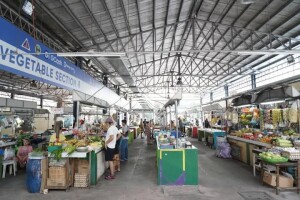
SENATORBam Aquino renewed his call for the government to formally declare a price freeze on basic commodities and essential goods, saying this would help shield the public from the impact of surging oil prices driven by the Middle East crisis.
“Mag-price freeze na sila. Mula noong nagsimula iyong hearing, tumaas na ng twenty pesos iyong diesel, iyong gasolina sampung piso. Sinabi ng Department of Agriculture tataas ang presyo ng pagkain kung wala silang gagawin. So mahalagang gumalaw na iyong gobyerno,” Aquino said in response to Presidential Communications Office (PCO) Usec. Claire Castro’s pronouncement that the government is carefully weighing the impact of a price freeze on all sectors.
“Kailangan natin ng agarang aksyon at ang mungkahi ko, gawin na iyong price freeze para sa napakaraming Pilipino na hirap na hirap na ngayon. Gawin na nila yan at tulungan nila yung napakarami nating mga kababayan,” he added.
During Thursday’s Proactive Response and Oversight for Timely and Effective Crisis Strategy (PROTECT) Committee hearing, government agencies confirmed Aquino’s earlier statement that only price monitoring — and not a price freeze — was included in President Ferdinand Marcos Jr.’s Executive Order No. 110 declaring a state of national energy emergency.
“No price freeze as of now, Mr. Chair,” Department of Economy, Planning, and Development (DEPDev) Assistant Secretary Reynaldo Cancio told Aquino.
Aquino questioned the decision to exclude the declaration of a price freeze, saying this was one of the reasons behind his earlier call to declare a state of national emergency.
“Ang nilabas ninyo is national energy emergency, which I know addresses the supply issues, but I don’t think it addresses the concern when it comes to basic commodities and essential goods,” he said.
“Palagay ko po at palagay siguro ng marami sa amin, kulang pa dahil ang hinahanap din ng taumbayan ay ang hindi magtuloy-tuloy ang pagtaas ng presyo sa mga palengke, sa supermarket, at sa grocery,” he added.
Undersecretaries and assistant secretaries from DEPDev, Department of Energy, and the Department of Finance were unable to explain why the government stopped short of declaring a broader state of emergency that could have enabled a price freeze on basic goods.