
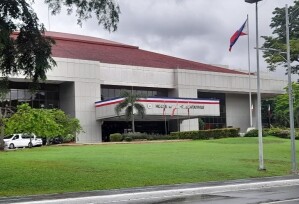
The multi-committee energy crisis response body of the House of Representatives will summon oil industry players to address concerns over their “cartel-like” behavior in fuel pricing amid tightening petroleum supply due the ongoing conflict in the Middle East.
Marikina City Rep. Miro Quimbo, chair of the House Committee on Ways and Means and presiding officer of the House’s Legislative Energy Action Development (LEAD) Council, said oil companies will be asked to explain why their prices move almost exactly the same, even in a deregulated market.
“Oo. Yes, yes, definitely. Tatanungin natin sila dyan,” Quimbo said when asked in a radio interview if oil companies would be invited to the hearings.
The move follows initial findings by the LEAD Council, formed under the direction of Speaker Faustino “Bojie” G. Dy III, that the weekly pricing system may be encouraging “cartelization” in a market controlled by only a few big players, as oil prices rise due to conflict in the Middle East.
Under the current system, oil firms adjust prices every Tuesday based on global trends from the previous week. Companies often announce the same price changes ahead of time, allowing others to match them.
During the LEAD Council hearing last Wednesday, Quimbo raised the issue with Department of Economy, Planning and Development Secretary Arsenio Balisacan, who said markets with only a few dominant players are more likely to move together.
“In Economics 101, Mr. Chair, when there are very few players in the markets, and you ask these players, government may be asking them to cooperate, to coordinate, they are actually asking a cartel,” Balisacan said.
Balisacan said he was not concluding that a cartel exists, but urged regulators to take a closer look.
“Mr. Chair, I’m not saying that there is a cartel, but I think that our regulatory agencies and in particular, PCC (Philippine Competition Commission) and ERC (Energy Regulatory Commission), should work together to investigate,” he said.
Quimbo said the system itself may be causing the problem.
“The intention is good on the part of the Department of Energy to prevent volatility in the market. But the purpose is good, but I think the effect is we are in effect promoting a cartelization, and it is government itself,” he said.
He added: “Gobyerno mismo ang nagbibigay ng presyo at nag-cre-create ng environment para magkulot itong mga oil companies. Kaya hindi nagkakahiwa-hiwalay ang presyo. Kasi nakikita nila lahat.”
In the interview, Quimbo said the dominance of a few big companies makes the situation worse.
“Kukonti lang talaga ang players, maraming players, pero karamihan diyan mga maliliit. ‘Yung big players natin diyan tatatlo lang talaga and they’re the ones dominating it,” he said.
While he stopped short of saying there is collusion, Quimbo said the pattern is hard to ignore.
“Hindi pa ako handang sabihin ‘yan, pero ang sinasabi natin, ‘yung resulta tila ganun. Lahat ng indikasyon at lahat ng pagkilos at ‘yung kawalan natin ng resulta sa lahat ng imbestigasyon, nagpapakita na tila meron,” Quimbo said.
He also raised concerns over possible hoarding, pointing out that some gas stations closed or rationed fuel even when supply was enough.
“The supply was never an issue. We always had enough supply. It was just that it was expensive. So bakit nagsasara? Because alam nila, pagdating ng Tuesday, magtataas na naman ng presyo,” he said.
“So kung nabili nila ito ng 50 pesos noong nakaraang linggo, alam nila by next week magiging 120 (pesos), magsasara sila, nagrarasyon sila. So ibig sabihin hino-hoarding ito,” he added.
Quimbo said the issue now comes down to strict enforcement.
The LEAD Council, made up of 13 House committees, is working on both short-term relief and long-term solutions to protect Filipinos from rising fuel costs.