

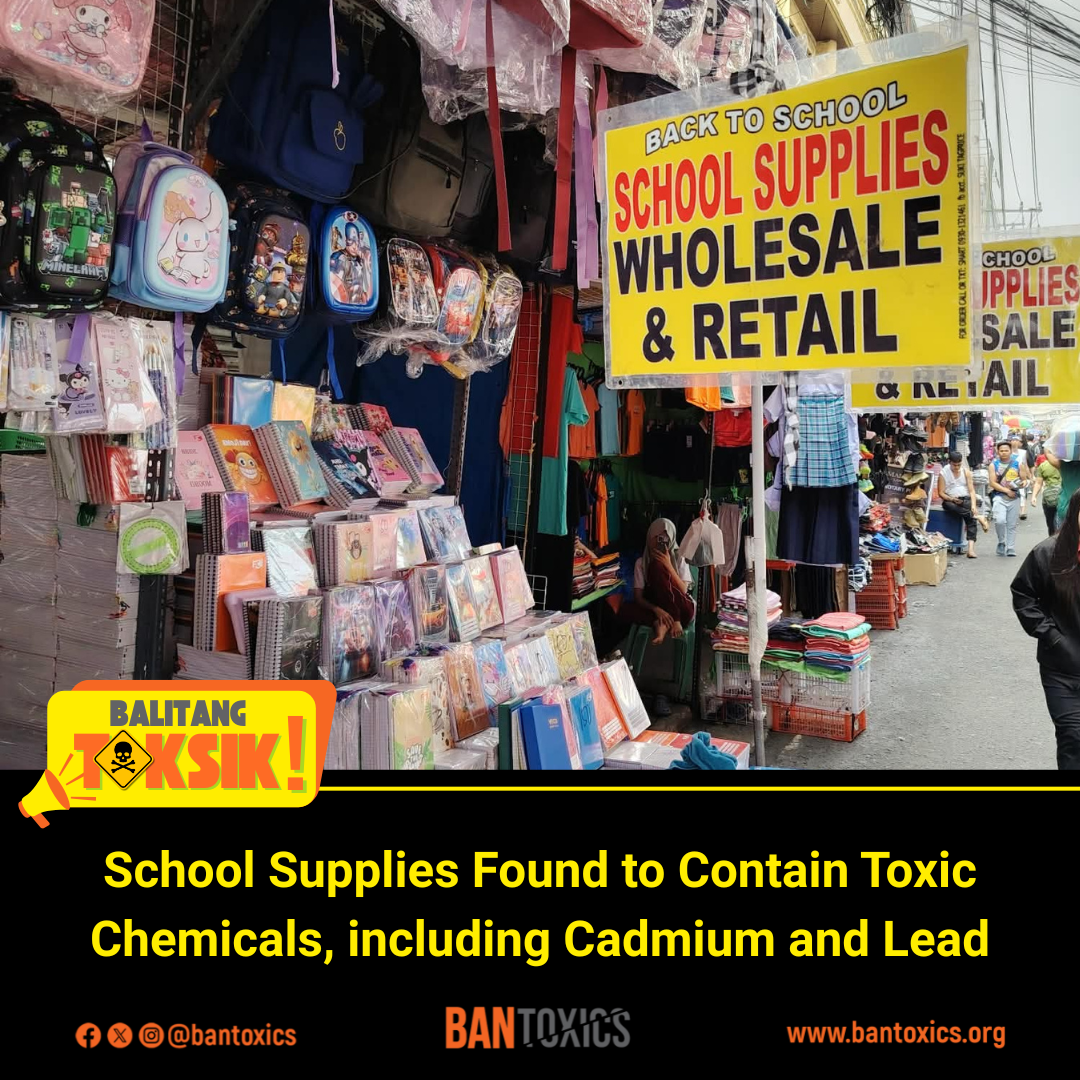
AS retailers begin to display various school supplies for early back-to-school shoppers, the toxic watchdog group BAN Toxics urges consumers to exercise extra caution when purchasing these items. The group warns that some products may contain harmful chemicals such as cadmium, lead, and phthalates, which pose significant health risks to children.
In its recent market monitoring, the group purchased samples of school supplies, including kiddie school bags, water containers, lunch boxes, pencils, pencil cases, pouches, and colorful plastic envelopes, from stores and sidewalk vendors in Makati City, the City of Manila, Pasay City, and Quezon City.
The group screened 75 samples for chemical content using a Vanta C Series Handheld XRF Analyzer. Results showed that many of the school supplies contained lead levels of up to 9,000 parts per million (ppm) and cadmium levels of up to 720 ppm. Plastic-made samples are suspected to be PVC-based (polyvinyl chloride), which typically contains chemical additives such as plasticizers, stabilizers, and colorants. Most of the school supplies were either improperly labeled or lacked production information.
According to the World Health Organization (WHO), lead exposure poses serious health risks to children. High levels of lead can severely damage the brain and nervous system. In extreme cases, exposure can lead to coma or death. Even low levels of lead exposure, often without visible symptoms, can impair brain development, reduce intelligence quotient (IQ), and cause behavioral problems such as decreased attention span and increased antisocial behavior. Lead exposure may also damage other organs, potentially causing anemia, high blood pressure, kidney damage, immunotoxicity, and toxicity to the reproductive organs.
Cadmium is classified by the WHO as one of the “ten chemicals of major public health concern,” alongside lead, dioxins, and mercury. It is a known human carcinogen and can harm the kidneys, skeletal system, and respiratory system.
PVC plasticizers also pose serious health risks, including cancer—particularly of the liver, testicles, and brain—as well as endocrine disruption, reproductive and immune system damage, and adverse effects on child development.
“We remind store owners and retailers to sell only school supplies that comply with regulatory standards to ensure product quality and protect children’s health and safety,” said Thony Dizon, Advocacy and Campaign Officer of BAN Toxics. “Harmful chemicals such as lead and cadmium should not be present in school supplies that are intended to support students’ learning and development.”
Regulatory agencies such as the Department of Trade and Industry (DTI), Food and Drug Administration (FDA), and the Department of Environment and Natural Resources (DENR) have issued guidelines and reminders to consumers regarding the purchase of school supplies. These agencies also ensure manufacturers comply with regulations that prohibit the use of harmful chemicals in children’s products.
In 2013, the DENR issued the Chemical Control Order (CCO) for Lead and Lead Compounds, which prohibits the use of lead in the production of school supplies.
BAN Toxics, which promotes safe and toxics-free children’s products, urges regulatory agencies to conduct post-marketing surveillance, on-site inspections and verifications, and intensify confiscation efforts against unregistered and unnotified school supplies containing health-damaging hazardous substances.
“Consumers should be assured of access to affordable, quality, and non-toxic school supplies that do not pose chemical hazards to children,” the group added.
The group also reiterated the following reminders on buying school supplies, as stated in the FDA advisory:
- Carefully read product labels.
- Choose school supplies suitable for your children.
- Regularly inspect school supplies for signs of breakage or wear that may cause injury or pose health and safety risks to the child. Dispose of damaged items properly.
- Always buy school supplies from reputable retailers or outlets.
- Immediately consult a physician in cases of accidental ingestion or if any adverse health effects occur from the use of school supplies.
- Contact the Food and Drug Administration if your children encounter safety- and/or health-related problems.
BAN Toxics said it will strengthen its initiatives for toxics-free school supplies through continued market monitoring and test-buy activities to detect harmful chemicals in children’s products as part of its Toxics-Free School Campaign.